
Deepfake detection for financial services
Protect banks, wealth management, and insurance firms from CEO voice fraud, deepfake video in investor calls, and manipulated documents with Raid AI's real time audio, image, and video detection.
$35M+
Lost in a single deepfake incident
$35M+
Lost in a single deepfake incident
99.7%
Audio detection accuracy
<50ms
Audio detection latency
120+
Languages supported
Financial institutions face a new generation of deepfake fraud spanning audio, image, and video. Attackers clone executive voices from conference call recordings, fabricate identity documents with AI generated photos, and deploy face swap video on investor calls. Raid AI detects deepfakes across all three modalities in real time, blocking threats at the point where a deepfake first enters your network.
5 attacks being run against financial services today
These are not projections. Each one has already been used against organisations in this position.
| Attack | Method | Modality | Who it lands on |
|---|---|---|---|
| 1Executive voice fraud | Attackers clone CFO or CEO voices using public interview audio, then call finance staff to authorise fraudulent wire transfers. One successful call moved $25.6 million out of a Hong Kong firm in 2024 before anyone realised it was wrong. |
| Who it lands on: Finance and treasury staff |
| 2Voice biometric spoofing | Call centres that rely on voice biometrics for customer verification are increasingly targeted by cloned customer voices. Attackers harvest voice samples from social media or data breaches and use them to take over high-net-worth accounts. |
| Who it lands on: Contact centres, account holders |
| 3Deepfake video in investor calls | Attackers use real time face swap technology to visually impersonate executives during investor presentations, board meetings, or earnings calls. Combined with cloned audio, the deception is convincing enough to move markets or authorise strategic decisions. |
| Who it lands on: Boards, investors |
| 4Relationship manager impersonation | Wealth management relies on trusted voice relationships. Attackers impersonate relationship managers over the phone to extract portfolio details, route payments, or social engineer clients into sharing credentials. |
| Who it lands on: Wealth clients |
| 5Trade confirmation fraud | In capital markets, verbal trade confirmations remain common. A cloned voice can authorise unauthorised trades that settle before the fraud is discovered, leaving the firm liable for losses. |
| Who it lands on: Trading desks |
Where it has already happened
Reported cases, each written up with its sources.




How Raid AI answers it
Trade desk protection
Deploy Raid AI on the voice infrastructure that handles trader and client calls. Flag deepfake audio during confirmation conversations before settlement occurs.
Treasury & wire transfer security
Monitor all voice authorisation calls for wire transfers. Automatically escalate flagged calls to a second human reviewer or dual control workflow.
Video KYC at account opening
Check the live selfie video in remote account opening and account recovery for face swaps and injected video, so an applicant wearing someone else's face is stopped before the account exists.

Visual media verification
Verify identity documents and submitted photographs for signs of AI generation or manipulation, so a generated ID or an edited photo is caught before it reaches downstream approvals.
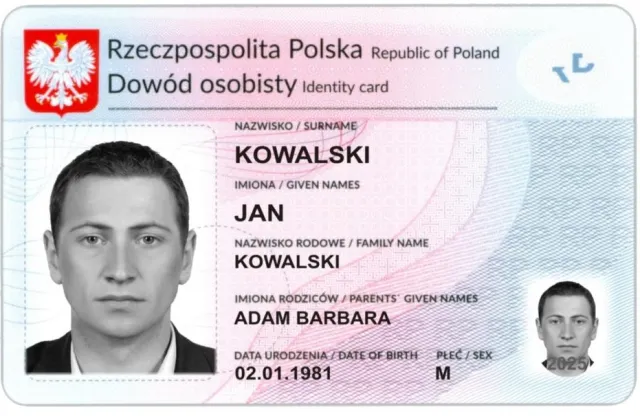
Statement and document forensics
Check the bank statements, payslips and proof of funds submitted at onboarding and for credit decisions. Edited balances, repeated figures and mismatched fonts are flagged before an account is opened or a loan is approved.
- Call centre customer verification
- Compliance reporting
- Real time detection on every inbound voice call across your trading desks, call centres, and treasury operations
- Joins Microsoft Teams, Zoom, Google Meet and Webex calls to catch deepfake audio wherever decisions are made
- Image analysis for manipulated financial documents and identity verification photos
- On premise deployment for banks with strict data sovereignty and regulatory requirements
- Zero retention available: call audio can be analysed and discarded, never stored
- Under 50 ms latency on audio that flags synthetic voices before the caller can complete a fraudulent request
What this looks like on a normal day
Composite situations drawn from the pattern of reported attacks, not accounts of named customers.
Illustrative scenario
Wire transfer authorisation call
A voice claiming to be the CFO calls treasury
It asks for an urgent $8M transfer to a new beneficiary
Raid AI flags a cloned voice in under 50 msFlagged
The agent holds the transfer
Dual control confirms the CFO never placed the call
Illustrative scenario
Private banking client verification
A caller claiming to be a private banking client asks to move a balance
The voice biometric check accepts the voice
Raid AI, alongside it, flags a real time cloneFlagged
The clone is traced to a speech the client gave at a public conference
Built for environments where security is not negotiable
From air gapped networks to strict data residency rules.
Retention you control
You choose how long media is kept. With zero retention, media is analysed and discarded once the verdict is returned and nothing is written to Raid AI storage. Otherwise media is kept for a window you set, 30 days by default, and then deleted. None of it is used to train a model, and enterprise tenants can keep their records inside their own database or infrastructure instead. Media goes only to the detection engines your tenant is configured to use, and only to produce the verdict.
Runs in your infrastructure
For air gapped and sovereign environments, the full detection stack runs inside your own network with no external connectivity.
TLS 1.3 encryption
All communication with the cloud API is encrypted using TLS 1.3. Media is protected from the moment it leaves your network.
Scoped API keys
Every integration is gated by a scoped key with configurable rate limits and IP allowlisting. Keys can be rotated at any time.
SOC 2 principles
Built around the five SOC 2 trust service criteria: security, availability, processing integrity, confidentiality and privacy.
Regional deployment
Cloud customers choose the region where their requests are processed. Media never leaves a specified jurisdiction.
Defence in depth
Infrastructure, application and model layers are each protected independently. A compromise at one layer does not expose customer data.
Audit logging
Every API call is written to a tamper evident audit trail, so you can reconstruct exactly what was processed, when, and by which key.