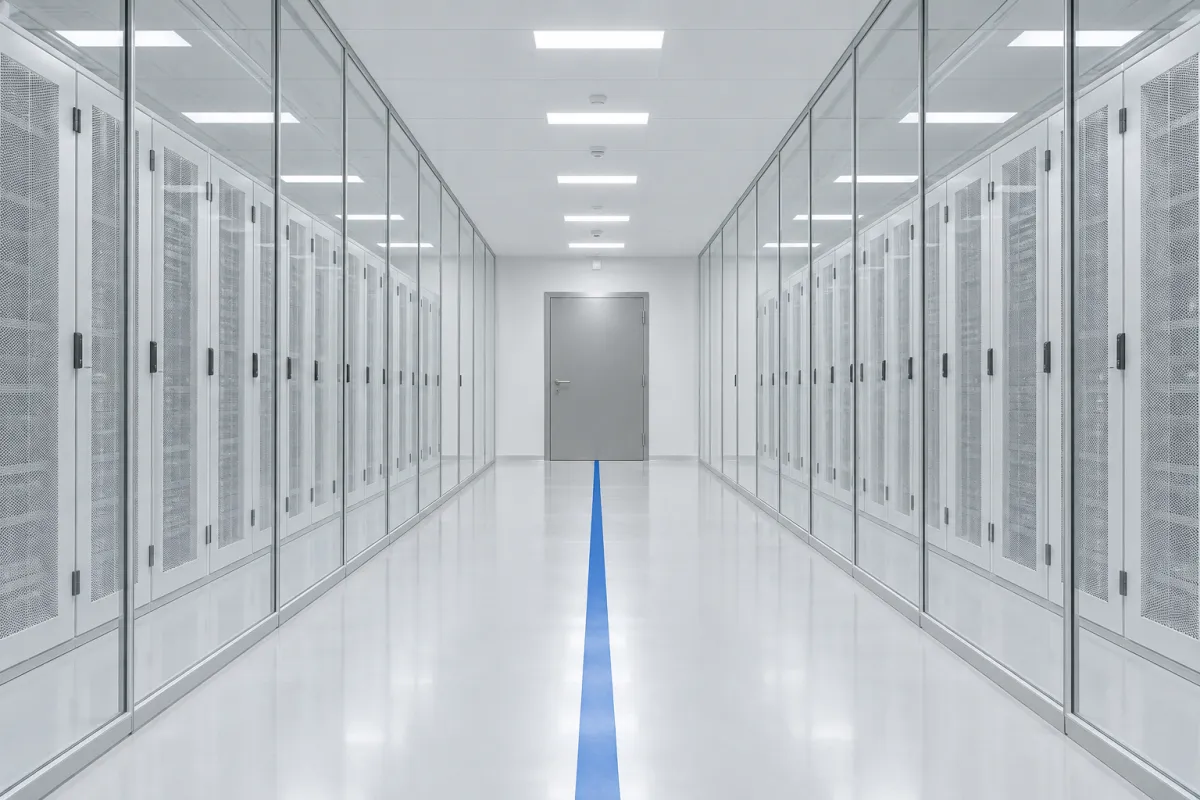
Deepfake detection for government and the public sector
Defend government agencies, defence, and public sector organisations from deepfake audio, manipulated imagery, and synthetic video. Raid AI offers on premise deployment, air gapped operation, and image and video forensics.



Air gapped
On premise deployment
Air gapped
On premise deployment
120+
Languages
99.7%
Audio detection accuracy
Government agencies face deepfake threats that span audio, image, and video, from synthetic voice calls impersonating officials to fabricated visual evidence used in disinformation campaigns. Raid AI detects AI generated media across all three modalities and supports fully on premise, air gapped deployment so sensitive content never leaves your controlled infrastructure.
5 attacks being run against public sector today
These are not projections. Each one has already been used against organisations in this position.
| Attack | Method | Modality | Who it lands on |
|---|---|---|---|
| 1Impersonation of elected officials | Deepfake audio of elected officials and senior government figures can be used to spread disinformation, manipulate markets, or provoke international incidents during fast-moving crises. |
| Who it lands on: Citizens, markets |
| 2Fabricated visual evidence | Deepfake images and video are weaponised to create fabricated intelligence, forge visual evidence for legal proceedings, or produce disinformation content that undermines public trust and destabilises institutions. |
| Who it lands on: Courts, investigators |
| 3Diplomatic channel spoofing | Diplomatic communications carry immense weight. A single deepfake call impersonating a foreign minister or ambassador can disrupt negotiations, trigger countermeasures, or damage long-term relationships. |
| Who it lands on: Ministries, embassies |
| 4Emergency services attacks | Attackers use cloned voices to dispatch emergency services to fake incidents, overload call centres, or impersonate officers during critical operations, putting lives at risk. |
| Who it lands on: Emergency call centres |
| 5Citizen services fraud | Public facing agencies handle identity verification at scale. Deepfake audio enables identity theft, benefits fraud, and unauthorised access to sensitive citizen records. |
| Who it lands on: Benefits and identity agencies |
How Raid AI answers it
Visual intelligence analysis
Analyse images and video for signs of AI generation or manipulation. Detect face swaps, synthetic backgrounds, generative artifacts, and tampered visual evidence across intelligence and investigative workflows.
Multilingual intelligence
Support for 120+ languages and specialized Arabic dialect coverage makes Raid AI ideal for intelligence services, embassies, and international operations.
Forensic analysis for investigations
Analyse recorded audio, images, and video evidence with timestamped verdicts and confidence scores. Export reports in formats accepted by courts and internal review boards.
- Air gapped deployment
- Citizen services protection
- Fully on premise and air gapped deployment options for classified and sovereign environments
- No external API dependencies, so the detection stack operates without connecting to the public internet
- Image and video forensic analysis for intelligence, evidence verification, and disinformation detection
- Multilingual detection with specialized accuracy for Arabic dialects, essential for Middle Eastern and North African operations
- Support for both recorded forensic analysis and real time monitoring of live communications across audio, image, and video
- Detailed audit logs and chain-of-custody reporting for legal and investigative use
What this looks like on a normal day
Composite situations drawn from the pattern of reported attacks, not accounts of named customers.
Illustrative scenario
National security voice analysis
An intelligence agency receives a recording attributed to a foreign official. Raid AI analyses the audio on isolated hardware and flags it as a synthesis, preventing a potential policy response based on fabricated evidence.
Illustrative scenario
Emergency services call verification
A metropolitan emergency services centre deploys Raid AI to verify inbound callers. Within weeks, the system identifies a pattern of AI generated false alarm calls and helps investigators trace them to a single source.
Built for environments where security is not negotiable
From air gapped networks to strict data residency rules.
Retention you control
You choose how long media is kept. With zero retention, media is analysed and discarded once the verdict is returned and nothing is written to Raid AI storage. Otherwise media is kept for a window you set, 30 days by default, and then deleted. None of it is used to train a model, and enterprise tenants can keep their records inside their own database or infrastructure instead. Media goes only to the detection engines your tenant is configured to use, and only to produce the verdict.
Runs in your infrastructure
For air gapped and sovereign environments, the full detection stack runs inside your own network with no external connectivity.
TLS 1.3 encryption
All communication with the cloud API is encrypted using TLS 1.3. Media is protected from the moment it leaves your network.
Scoped API keys
Every integration is gated by a scoped key with configurable rate limits and IP allowlisting. Keys can be rotated at any time.
SOC 2 principles
Built around the five SOC 2 trust service criteria: security, availability, processing integrity, confidentiality and privacy.
Regional deployment
Cloud customers choose the region where their requests are processed. Media never leaves a specified jurisdiction.
Defence in depth
Infrastructure, application and model layers are each protected independently. A compromise at one layer does not expose customer data.
Audit logging
Every API call is written to a tamper evident audit trail, so you can reconstruct exactly what was processed, when, and by which key.